



 9 min read
Sendcloud is for ecommerce teams that have reached the point where shipping labels, carrier portals, tracking emails, and returns can no longer live in separate tabs. It sits in the shipping and fulfillment tools lane, with a practical focus on multi-carrier shipping, automation, branded tracking, returns, and ecommerce integrations.
The direct verdict: consider Sendcloud if you sell in Europe, connect multiple ecommerce channels, and want one operating layer for post-purchase logistics. Compare alternatives if you are US-first, extremely low volume, or need warehouse management before carrier automation. Shipping software should remove admin work, not become another little operations department with a login screen.
Editorial disclosure
ToolBlueprints compares software using official product pages, public pricing pages, source screenshots, and SERP benchmarks. This Sendcloud profile is not sponsored, and the outbound website link uses the official Sendcloud URL rather than a paid affiliate link.
Quick Facts
Decision snapshot for Sendcloud buyers.
| Field | Summary |
|---|---|
| Category | Shipping & Fulfillment |
| Best for | European ecommerce teams consolidating multi-carrier labels, tracking, returns, and sales-channel integrations |
| Not for | Very small single-carrier sellers, US-only teams, or operators that need a WMS first |
| Free plan / trial | EUR 0/mo starting option and 14-day free trial messaging shown on official pages |
| Starting price caveat | Paid plans shown from EUR 26/mo yearly on captured pricing page, plus per-label fees; monthly billing can be higher |
| Pricing model | Free plan, paid subscription tiers, per-label fees, carrier/shipping costs, and plan-gated features |
| Integrations | Shopify, WooCommerce, Magento, PrestaShop, Etsy, Amazon, eBay, Bol.com, Picqer, Odoo, Wix, Lightspeed, Shopware, API |
| Setup effort | Moderate: connect store, sender address, carrier/rate setup, label rules, tracking emails, and returns |
| Website | https://www.sendcloud.com/ |
Pricing and integration details were checked from official Sendcloud pages on May 27, 2026.
What Sendcloud Does
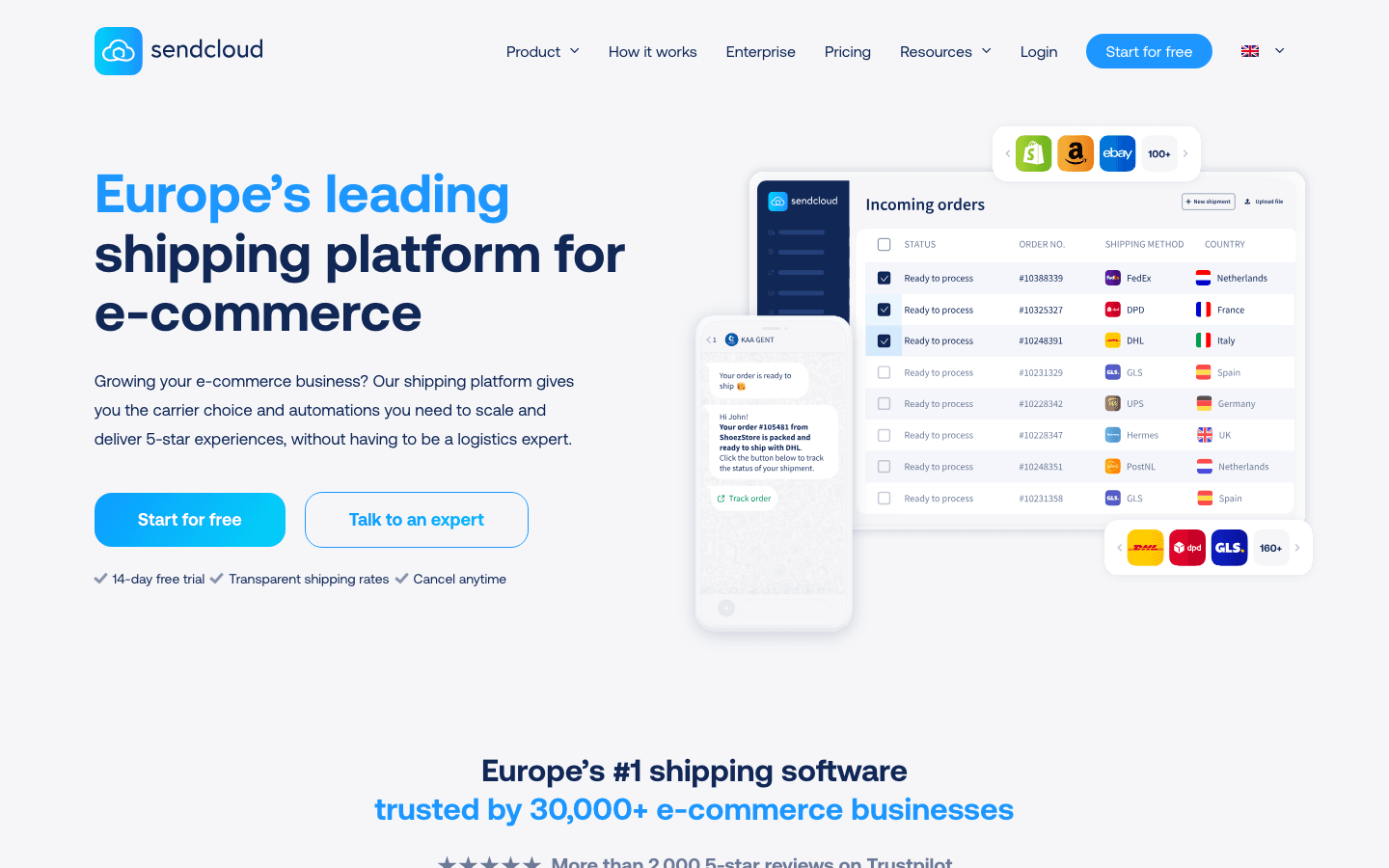
Sendcloud helps ecommerce teams connect sales channels, create shipping labels, access carrier options, automate shipping rules, send tracking updates, and manage returns. Its homepage positions the product around carrier choice and automations for ecommerce teams that want to scale without becoming logistics specialists.
The useful part is the bundle: shipping, checkout delivery, tracking, returns, and integrations live close together. That matters when a store is no longer just printing labels, but trying to keep post-purchase promises consistent across countries, carriers, marketplaces, and customer expectations.
Best Use Cases
- European ecommerce teams that need multi-carrier shipping, label creation, tracking, and returns in one workflow
- Shopify, WooCommerce, Magento, PrestaShop, Amazon, eBay, and marketplace sellers consolidating order shipping
- Brands that want branded tracking pages, automated notifications, and self-service returns
- Stores outgrowing manual carrier portals and spreadsheet-based shipping operations
Who Should Compare Alternatives
- Very small sellers that ship only a handful of orders through one carrier portal
- US-only teams that need a shipping platform built primarily around US carrier networks
- Operators that want free shipping software with no per-label fees as volume grows
- Brands that need warehouse-grade WMS logic before they need shipping automation
Feature Breakdown
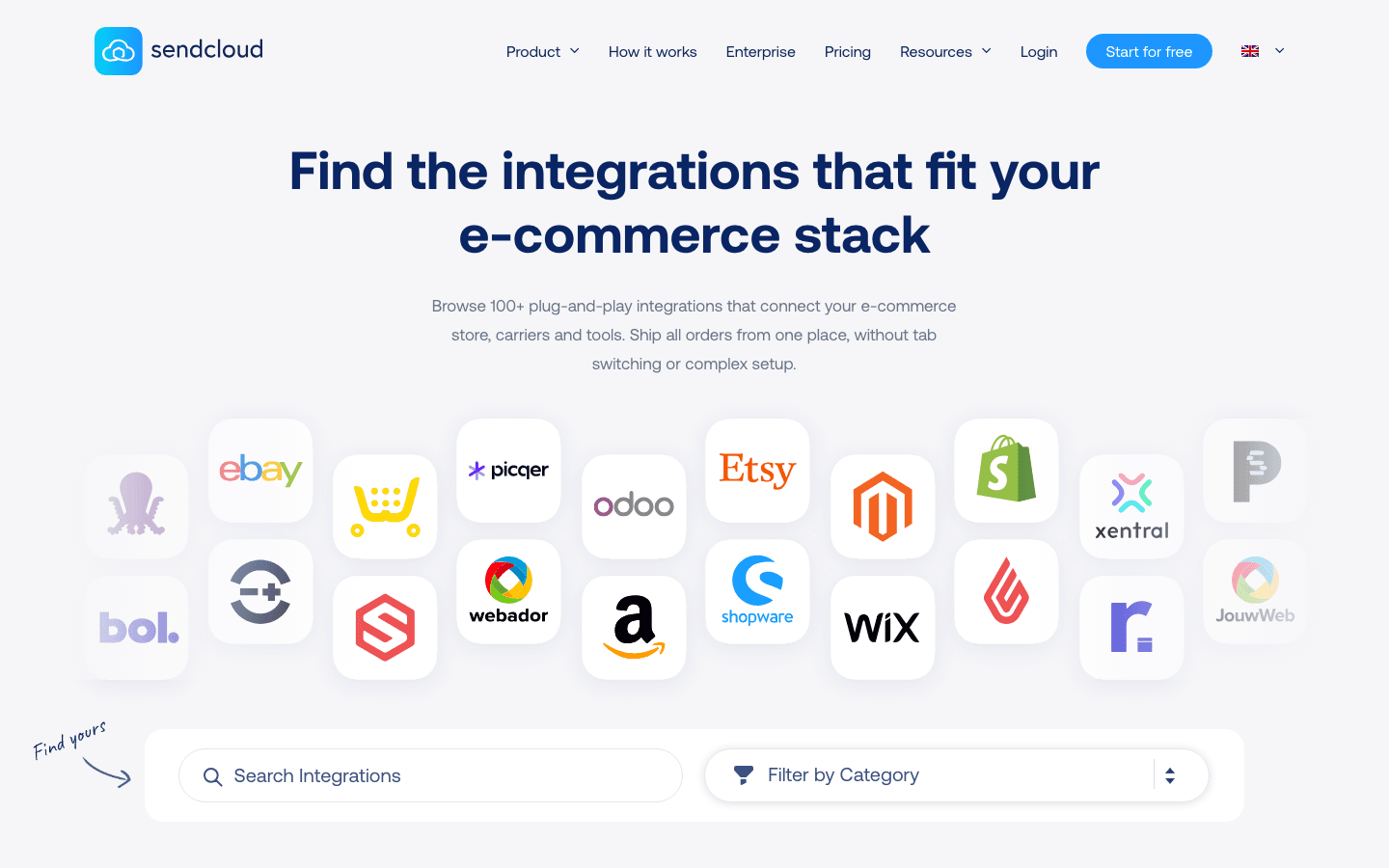
Sendcloud is strongest when the shipping workflow spans multiple tools. Official pages and help center docs describe webshop, marketplace, WMS, ERP, API, and partner integrations, plus shipping labels, checkout delivery options, tracking, and returns. The integrations page promotes 100+ plug-and-play integrations for connecting ecommerce stores, carriers, and tools.
For a Shopify-heavy operation, Sendcloud can sit next to the broader
Shopify growth stack rather than replacing storefront, analytics, support, or marketing systems. It is the logistics layer: orders come in, labels go out, customers get updates, and returns hopefully do not require a group therapy session in customer support.
Where It Is Strong
- Multi-carrier label workflow for ecommerce teams shipping across markets
- Tracking pages and notifications for post-purchase communication
- Return portal and return rules for reducing manual return handling
- Integration coverage across ecommerce stores, marketplaces, WMS, ERP, API, and partners
Where It Needs Care
- Per-label fees and plan limits need to be modeled against order volume
- Carrier terms, rates, and availability vary by country and contract
- The value is much clearer once shipping operations are complex enough to automate
- Warehouse-heavy teams may need WMS logic in addition to Sendcloud
Pricing and Plan Caveats
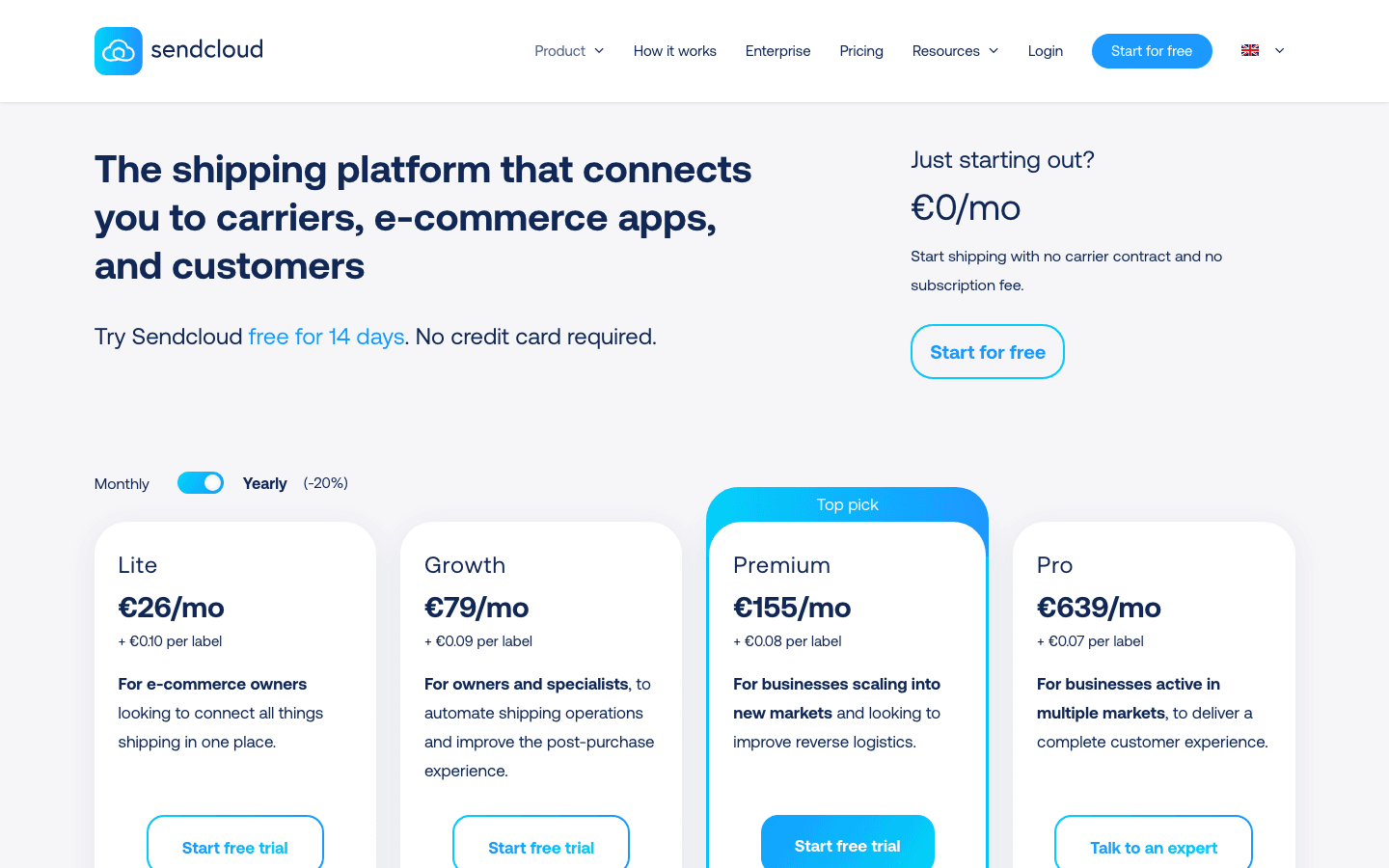
Sendcloud pricing starts with a EUR 0/mo option for sellers just starting out. The pricing page captured during this review showed paid yearly plans from Lite at EUR 26/mo plus EUR 0.10 per label, Growth at EUR 79/mo plus EUR 0.09 per label, Premium at EUR 155/mo plus EUR 0.08 per label, and Pro at EUR 639/mo plus EUR 0.07 per label. Monthly billing can be higher, and Enterprise-style needs should be checked directly with Sendcloud.
Do not evaluate this like a simple monthly app bill. Total cost depends on plan, label fee, shipping volume, carrier rates, country, package mix, and which tracking, returns, automation, analytics, or branding features you need. The pricing page is a starting point, not your landed cost model.
Pricing Snapshot
Current official plan positioning checked May 27, 2026.
| Plan | Price shown on captured yearly view | Best fit | Important caveat |
|---|---|---|---|
| Free | EUR 0/mo | New sellers connecting shipping basics | Shipping and carrier costs still apply |
| Lite | EUR 26/mo + EUR 0.10 per label | Ecommerce owners connecting shipping in one place | Monthly billing and feature packaging can differ |
| Growth | EUR 79/mo + EUR 0.09 per label | Teams automating shipping operations and improving post-purchase workflows | Model per-label fees before choosing a tier |
| Premium | EUR 155/mo + EUR 0.08 per label | Businesses scaling into new markets and reverse logistics | Useful only if tracking, returns, and automation justify the tier |
| Pro | EUR 639/mo + EUR 0.07 per label | Businesses active in multiple markets | Likely overkill for early-stage stores |
Setup, Integrations, and Operations
A practical Sendcloud rollout starts with one store, one sender address, a clean carrier/rate setup, and a short list of shipping rules. Then add tracking emails, branded tracking pages, and returns once labels are stable. Official getting-started guidance points merchants toward connecting a shop, configuring sender and return addresses, setting up a carrier contract or Sendcloud rates, and creating labels.
The main operational decision is whether Sendcloud is the system of action for shipping or just another layer above existing carrier portals. If the team still jumps into every carrier dashboard to fix basic tasks, the setup is not done. If order import, label creation, tracking, and returns are handled in a shared workflow, it is doing its job.
Pros and Cons
Pros
- Official pages position Sendcloud around carrier choice, automation, tracking, returns, and shipping-rate transparency
- The integrations page promotes 100+ plug-and-play integrations for ecommerce stores, marketplaces, carriers, and tools
- Pricing includes a free starting tier and paid tiers that scale into tracking, returns, automation, and analytics features
- Useful for European sellers that want to connect multiple carriers without custom integration work
- Branded tracking and returns workflows help reduce repetitive support tickets after checkout
Cons
- Paid plans include a monthly subscription plus per-label fees, so total cost depends on volume
- Carrier access, rates, and features vary by country, contract, plan, and shipping profile
- It can be more platform than a tiny single-carrier seller needs
- Teams with deep warehouse requirements may still need a dedicated WMS alongside Sendcloud
Alternatives to Consider
ShipStation, Shippo, Easyship, ShippyPro, Veeqo, and MyParcel are natural comparisons depending on geography, carrier coverage, marketplace needs, and warehouse setup. If the shipping decision is part of a broader fulfillment model, compare adjacent ToolBlueprints profiles like
Printify for print-on-demand fulfillment and Spocket for dropshipping supplier discovery. They are not direct Sendcloud replacements, but they help clarify whether your problem is shipping automation, product sourcing, or fulfillment model design.
Final Verdict
Sendcloud is a practical fit for European ecommerce teams that need shipping operations to become repeatable: connected channels, carrier options, labels, tracking, returns, and automation. It is less useful when shipping is still simple enough for one carrier portal, or when the real bottleneck is warehouse process rather than post-purchase logistics software.
FAQs
What is Sendcloud best for?
Sendcloud is best for ecommerce teams that want to centralize shipping labels, carrier options, tracking notifications, and returns across multiple sales channels.
Does Sendcloud have a free plan?
Yes. Sendcloud lists a EUR 0/mo starting option and official help content says creating an account does not require choosing a paid subscription.
Which ecommerce platforms does Sendcloud integrate with?
Sendcloud lists integrations across ecommerce stores, marketplaces, WMS, ERP, API, and partner apps, including Shopify, WooCommerce, Magento, PrestaShop, Etsy, Amazon, eBay, Bol.com, Picqer, Odoo, Wix, Lightspeed, and Shopware.
Is Sendcloud only for shipping labels?
No. Official product pages also cover checkout delivery options, tracking pages, tracking notifications, shipping automation, and returns workflows.
When should a seller compare Sendcloud alternatives?
Compare alternatives when you are US-first, only need one carrier portal, want no per-label platform fees, or need warehouse management before shipping automation. See related sourcing, fulfillment, and logistics tools for ecommerce operators: Compare Shipping & Fulfillment Tools. Compare Sendcloud with an adjacent print-on-demand fulfillment workflow when product fulfillment model is the bigger question: Read the Printify Review. How ToolBlueprints evaluates software pages, sources, screenshots, pricing caveats, and buyer fit: ToolBlueprints Methodology.