
 19 min read
The practical Shopify growth stack for 2026 is Shopify, Klaviyo, Triple Whale, Gorgias, Okendo, and Loop Returns. It is built for a DTC or ecommerce team that has moved past launch mode, is buying traffic, needs stronger retention, and cannot keep making decisions from five disconnected dashboards. A realistic software budget is about $900 to $3,500+ per month before ad spend, payment fees, SMS usage, fulfillment fees, and custom enterprise contracts.
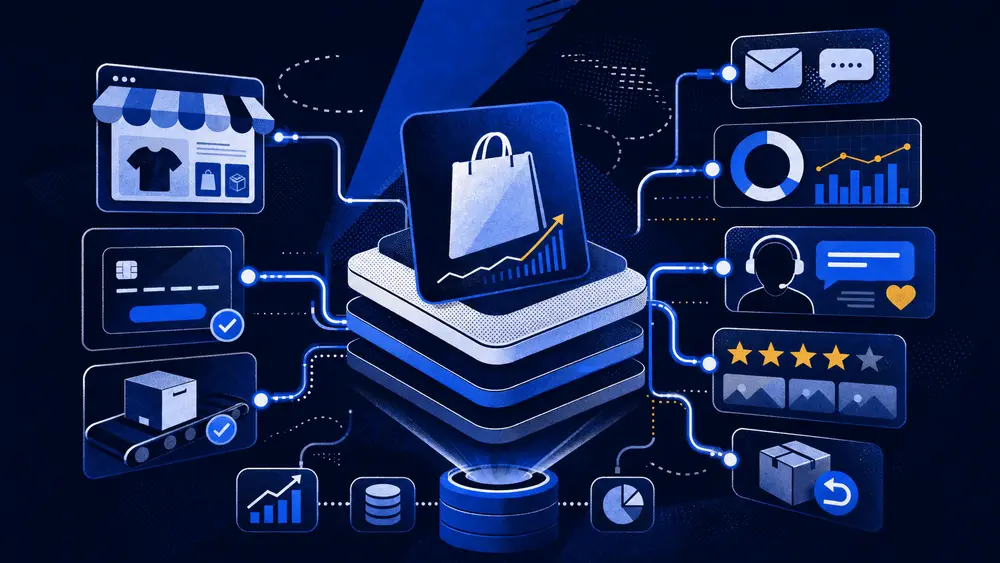
This is a system blueprint, not a trophy shelf. Shopify owns the storefront and checkout. Klaviyo owns lifecycle revenue. Triple Whale owns performance reporting and attribution. Gorgias owns customer conversations. Okendo owns reviews, UGC, and customer marketing inputs. Loop owns returns and exchanges. The whole point is clean handoffs: order data, customer data, review signals, support context, and returns outcomes should move without spreadsheet gymnastics.
Research was checked on May 20, 2026 using DataForSEO US Google SERP data, live official pricing pages, and public product pages. Start with the Shopify profile on ToolBlueprints if you want the platform context first.
Editorial disclosure
ToolBlueprints is an editorial software research site. We may earn from affiliate or commercial links in some articles, but this Shopify growth stack was selected from public product documentation, pricing pages, integration fit, and practical operating roles. This article is not sponsored by the vendors covered here.
Shopify Growth Stack Snapshot
A fast read of who this stack is for, what it costs, and why the order matters.
Business type | Growth-stage Shopify or Shopify Plus DTC brand
Stage | Roughly $50K to $1M+ monthly revenue, active paid acquisition, growing support volume
Primary goal | Improve profitable growth by connecting retention, attribution, support, reviews, and returns
Required tools | Shopify, Klaviyo, Triple Whale, Gorgias, Okendo, Loop Returns
Optional tools | Recharge or Smartrr for subscriptions, ShipStation or a 3PL system for fulfillment, Tapcart for mobile app revenue, Postscript or Attentive for SMS specialization
Estimated monthly cost | $900 to $3,500+ before ad spend, payment fees, SMS carrier costs, shipping labels, and custom contracts
Setup time | 2 to 6 weeks for a disciplined rollout; longer if tracking, support macros, reviews migration, or returns policies are messy
Main tradeoff | This stack favors clean data flow and accountable ownership over the absolute cheapest app mix
Pricing is a planning range. Shopify, Klaviyo, Gorgias, Okendo, Loop, and Triple Whale all depend on region, usage, revenue, contacts, orders, tickets, or custom terms.
Who This Stack Is For
- Shopify brands with meaningful repeat purchase potential, not one-off novelty stores.
- Teams spending enough on paid traffic that attribution, post-purchase surveys, and channel reporting affect budget decisions.
- Operators with customer support volume high enough that order context, macros, returns, and loyalty moments need one owner.
- Brands where reviews, UGC, quizzes, loyalty, or customer attributes can improve conversion and segmentation.
- Teams that can assign owners for lifecycle, support, analytics, reviews, and operations instead of letting apps quietly rot.
Who This Stack Is Not For
- New Shopify stores that have not proven product-market fit. Start with Shopify, native analytics, and one email tool.
- Dropshipping tests where speed and margin validation matter more than customer lifecycle infrastructure.
- Teams that want one cheap app bundle to do everything. This blueprint uses best-of-breed handoffs.
- Enterprise commerce teams that already need ERP, data warehouse, CDP, custom OMS, or multi-region legal workflows.
- Brands with no internal owner for data quality. A stack without ownership is just a subscription pile.
Recommended Stack At A Glance
Each tool has one clear job. Avoid buying overlapping apps unless a migration or specialty workflow justifies it.
Storefront, checkout, payments | Shopify | Ecommerce lead or founder | Core commerce system with storefront, checkout, product, order, customer, payments, and app ecosystem. | Plan pricing and card rates vary by region, billing term, and Shopify Plus contract.
Email and SMS lifecycle | Klaviyo | Lifecycle marketer | Owns welcome, abandon, post-purchase, winback, replenishment, segmentation, and customer profile activation. | Cost scales with active profiles, email sends, SMS credits, and support add-ons.
Attribution and growth reporting | Triple Whale | Growth lead or performance marketer | Connects ecommerce, marketing channel, pixel, survey, and performance data for paid and lifecycle decisions. | Plan pricing scales with GMV/revenue tier and add-ons.
Customer support | Gorgias | CX lead | Centralizes Shopify order context, tickets, macros, automations, and revenue-support workflows. | Ticket volume, automation usage, and AI resolved conversations change the invoice.
Reviews, UGC, customer marketing | Okendo | Retention or CX lead | Collects reviews, customer attributes, quizzes, loyalty, referrals, and survey signals for conversion and segmentation. | Pricing is custom and tied to order volume and platform/bundle scope.
Returns and exchanges | Loop Returns | Operations lead | Automates return policy, exchanges, store credit, workflows, and return outcome tracking. | Starts around published plan levels, then depends on advanced exchange, tracking, and enterprise needs.
Setup Order And Ownership
Install the stack in the order data is created. Do not start with attribution dashboards if checkout, events, order tags, and lifecycle consent are not clean yet. That is how teams create beautiful dashboards that describe bad plumbing.
- Shopify first: confirm products, variants, collections, shipping zones, taxes, payments, checkout settings, consent settings, and core app permissions.
- Klaviyo second: sync Shopify customers, products, orders, events, consent, lists, and segments before building high-volume automations.
- Triple Whale third: connect Shopify, ad platforms, pixel/post-purchase survey signals, email/SMS performance, and reporting views.
- Gorgias fourth: connect Shopify order context, email/chat/social channels, macros, routing rules, refund workflows, and support tags.
- Okendo fifth: migrate or collect reviews, map attributes to customer profiles, and push useful segments into Klaviyo.
- Loop sixth: configure return policies, exchange incentives, refund/store-credit options, and Gorgias handoffs for support exceptions.
The owners should be explicit: ecommerce lead owns Shopify hygiene, lifecycle owns Klaviyo, growth owns Triple Whale, CX owns Gorgias, retention/CX owns Okendo, and ops owns Loop. One person can hold multiple roles early, but every layer still needs an owner.
Implementation Order
A practical rollout sequence for reducing rework and avoiding duplicate data streams.
1 | Shopify | Clean catalog, checkout, payments, consent, shipping, tax, and product taxonomy. | Everything else depends on Shopify order and customer data. | Orders, products, customers, discounts, and refunds are reliable.
2 | Klaviyo | Connect Shopify, import profiles, confirm consent, and rebuild core flows. | Needs Shopify events and product catalog. | Welcome, abandon, post-purchase, and winback flows are live with suppression logic.
3 | Triple Whale | Connect Shopify, ad channels, pixel, and survey layer. | Needs stable checkout events and marketing channels. | Growth reporting reconciles with Shopify and ad-platform directionally.
4 | Gorgias | Connect Shopify, email, chat, social channels, macros, and routing. | Needs Shopify orders and customer records. | Agents can resolve order, return, discount, and subscription questions from one workspace.
5 | Okendo | Launch review requests, attributes, and UGC collection. | Needs Shopify orders and Klaviyo profile/event handoff. | Review requests, moderation, and segmentation inputs are live.
6 | Loop Returns | Configure return policies, exchange incentives, and exception paths. | Needs Shopify orders, Gorgias support path, and email notifications. | Customers can self-serve returns and support sees exceptions.
Tool Notes
Shopify: The Commerce Layer
Shopify is the operating base: storefront, checkout, product data, customer records, orders, payments, discounts, inventory touchpoints, and the app ecosystem. For this blueprint, Shopify is not just "the website." It is the source of truth every other tool must respect.
Setup note: clean product taxonomy, customer tags, shipping profiles, discount rules, checkout settings, and consent settings before connecting downstream tools. Bad product variants and inconsistent order tags will leak into every lifecycle, support, returns, and reporting workflow.
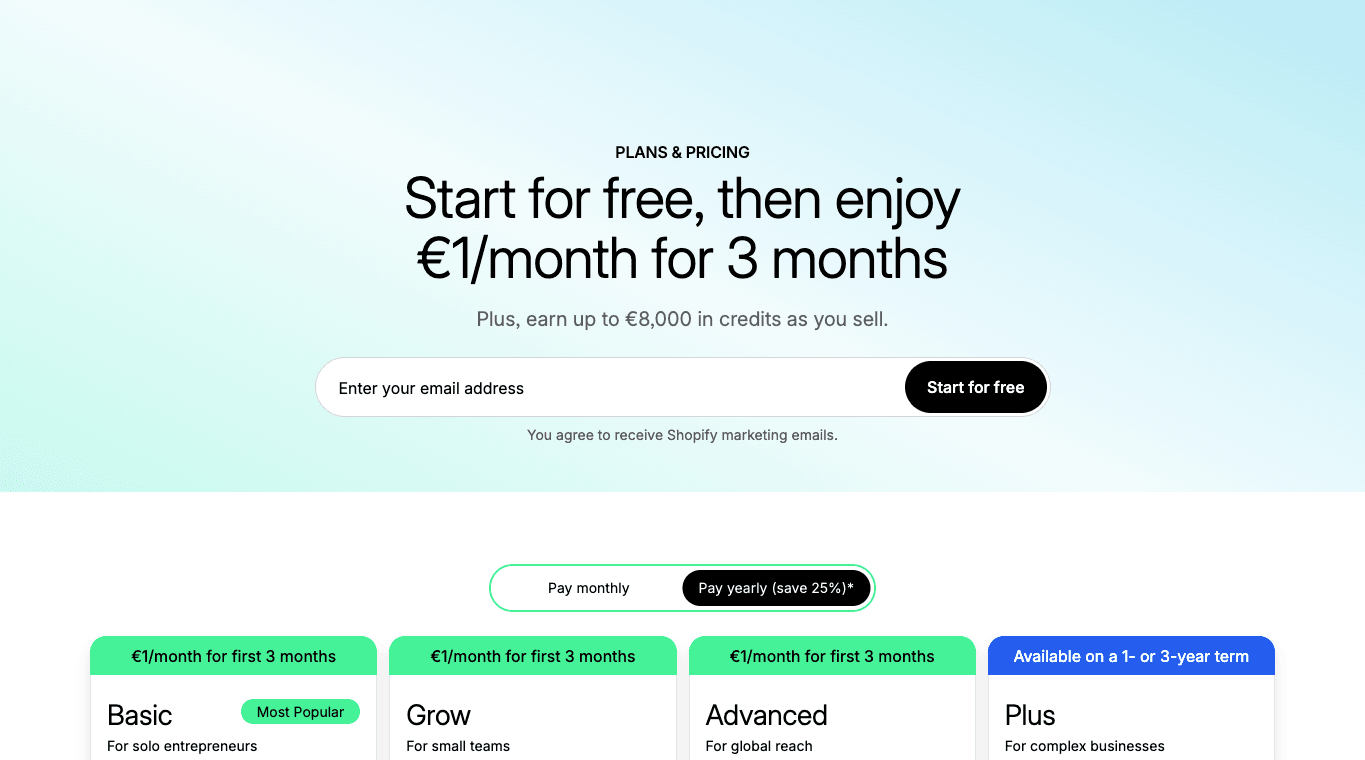
Cost caveat: the official pricing page localizes plan pricing and promotional offers by region. During research from Lisbon on May 20, 2026, the page displayed Basic, Grow, Advanced, and Plus plans with yearly EUR pricing and a first-three-months promotion. Use the current Shopify pricing page for the market you sell in.
Klaviyo: The Lifecycle Revenue Layer
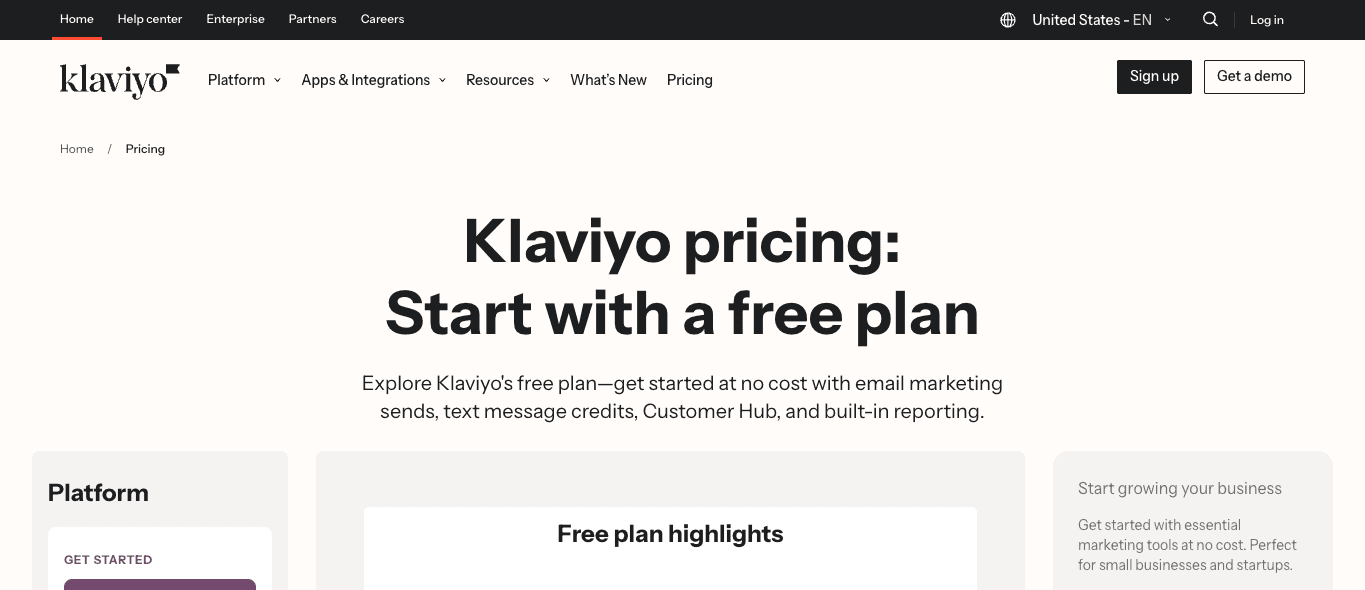
Klaviyo belongs here because Shopify growth depends on owned audience economics: welcome capture, abandon recovery, post-purchase education, replenishment, winback, VIP treatment, and segmentation. The official pricing page shows a free plan with profile, email, and mobile-message limits, then scales by list/profile and usage.
Integration dependency: connect the Klaviyo Shopify integration before building automations. Then pass review attributes, quiz answers, support outcomes, and return behavior into segments where they actually change messaging.
Setup note: start with four flows - welcome, browse/cart/checkout abandon, post-purchase, and winback. Add SMS only when you have consent quality and margin room. SMS without segmentation is an expensive way to annoy your best customers.
Triple Whale: The Attribution And Reporting Layer
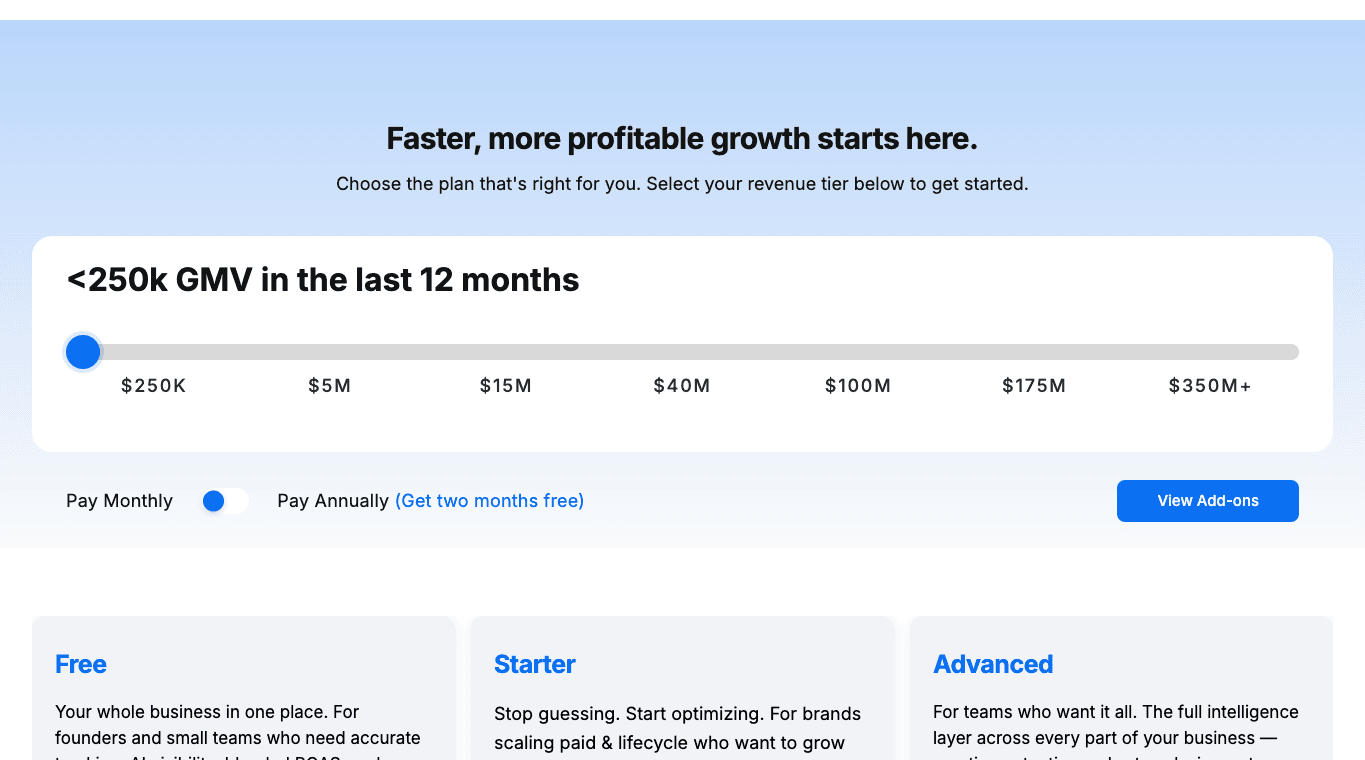
Triple Whale is the growth dashboard for this stack. The pricing page frames plans around GMV tiers and includes ecommerce platform, marketing channel, Amazon, pixel, attribution, post-purchase survey, and AI analysis capabilities. At the <250K GMV tier checked on May 20, 2026, the official page showed a free plan and a Starter plan at $149/month.
Integration dependency: connect Shopify, paid channels, Klaviyo/email data, survey layer, and pixel tracking only after Shopify and consent settings are stable. Its job is to help decide budget and creative direction, not to replace accounting or a data warehouse.
Setup note: reconcile Shopify revenue, ad-platform spend, and Triple Whale reporting weekly for the first month. Do not let one dashboard become the single truth until the team understands where each metric differs.
Gorgias: The Customer Support Layer
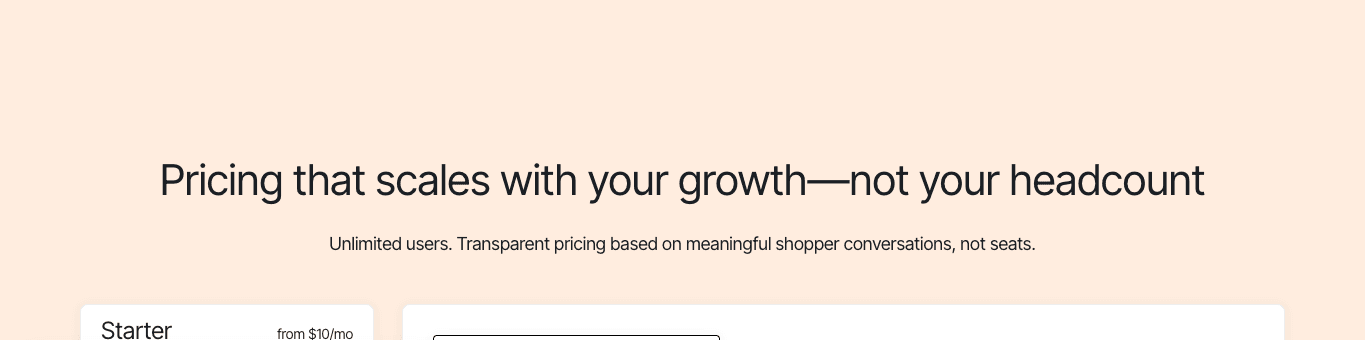
Gorgias fits growth-stage Shopify teams because support becomes part of retention. The official pricing page prices by meaningful shopper conversations rather than seats, lists unlimited users, and shows plans from Starter through Enterprise. It also lists integrations including Klaviyo, Recharge, Loop Returns, Yotpo, and 150+ more.
Integration dependency: pull Shopify order context into the helpdesk, then connect Loop for return exceptions and Klaviyo for segment-level follow-up. Customer support should see the order and return state before asking a shopper to repeat their life story.
Cost caveat: Gorgias pricing changes with ticket volume, overage tickets, support channels, add-ons, and AI Agent resolved conversations. Model it from monthly tickets, not from headcount.
Okendo: The Review, UGC, And Customer Marketing Layer
Okendo is the social proof and customer-input layer. For this stack, the reason to pick Okendo over a lightweight reviews app is not just star collection. It is using reviews, customer attributes, surveys, quizzes, loyalty, referrals, and UGC as inputs for conversion and segmentation.
Integration dependency: Okendo should receive Shopify order triggers and send useful customer attributes into Klaviyo. Reviews should also inform support and merchandising, especially when fit, sizing, durability, or shipping complaints show up repeatedly.
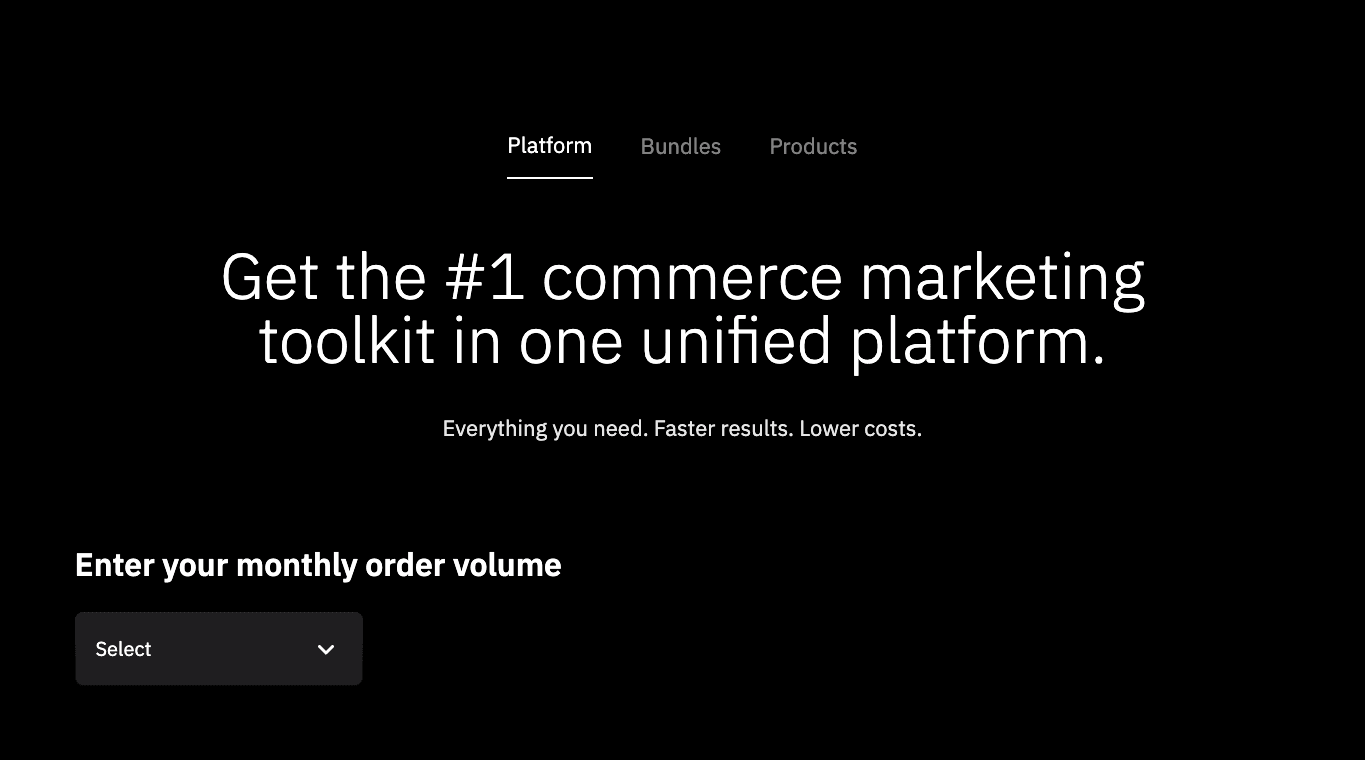
Cost caveat: Okendo now presents platform and scale pricing as custom, with monthly order-volume selection. That makes it a better fit once reviews and customer marketing are strategic, not when a store only needs a cheap review widget.
Loop Returns: The Returns And Exchange Layer
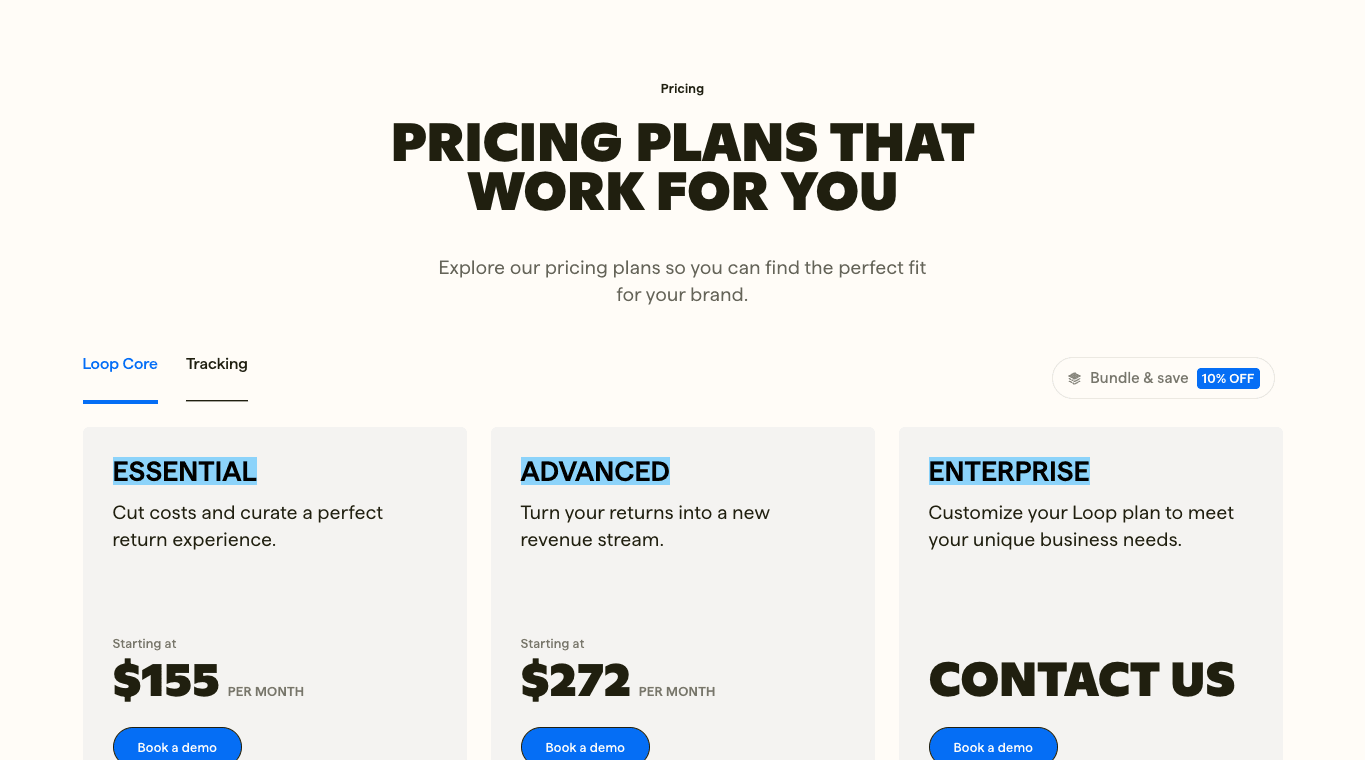
Loop Returns owns the post-purchase operational moment most growth teams underestimate. The official pricing page checked on May 20, 2026 showed Loop Core Essential starting at $155/month, Advanced starting at $272/month, and Enterprise by contact.
Integration dependency: Loop needs clean Shopify order data, return policies, exchange rules, refund/store-credit options, and a Gorgias handoff for exceptions. If Klaviyo sends post-purchase emails, those should not contradict Loop return logic.
Setup note: use exchanges, bonus credit, and store credit carefully. The goal is not to trap customers. It is to make reasonable returns painless while preserving revenue where the shopper genuinely wants a better item.
Data Flow And Integration Map
The stack works when each layer receives the data it needs and sends only useful signals downstream.
Order and customer events | Shopify | Klaviyo, Triple Whale, Gorgias, Okendo, Loop | Customers, products, orders, refunds, discounts, consent, fulfillment status. | Duplicate, delayed, or inconsistent event names.
Lifecycle behavior | Klaviyo | Triple Whale, Shopify segments where relevant | Campaign and flow revenue, profile segments, email/SMS engagement. | Attributing all revenue to email because the window is too generous.
Attribution and survey data | Triple Whale | Growth team, leadership, reporting rituals | Channel spend, pixel events, post-purchase survey answers, blended performance. | Treating directional attribution as accounting.
Support context | Gorgias | Klaviyo, Loop, CX reporting | Ticket tags, customer sentiment, order exceptions, return/refund context. | Agents tag inconsistently, making CX data useless.
Reviews and attributes | Okendo | Shopify product pages, Klaviyo, merchandising | Review content, star ratings, UGC, customer attributes, quiz/survey responses. | Collecting reviews but never using attributes in merchandising or segmentation.
Returns and exchanges | Loop | Shopify, Gorgias, Klaviyo | Return status, exchange decisions, refund/store-credit outcomes, exception cases. | Support and email flows promise different return outcomes.
Estimated Monthly Cost And Upgrade Thresholds
For a growth-stage Shopify brand, budget about $900 to $3,500+ per month for the required software layer before ad spend, payment processing, SMS carrier fees, shipping labels, 3PL fees, custom onboarding, and enterprise contracts. The range is wide because usage matters: Klaviyo scales with profiles and sends, Triple Whale with GMV tier, Gorgias with tickets and AI interactions, Okendo with order volume and platform scope, and Loop with plan/add-on needs.
Cost Model
Use this as a planning model, not an invoice. Vendor pages, currency, annual billing, promotions, and custom terms can change quickly.
Shopify | Plan-based, regional pricing, card rates, Plus custom/term options. | Grow, Advanced, or Plus depending on team, market, and checkout needs. | Move up when staff permissions, reporting, checkout, B2B, automation, or Plus economics justify it.
Klaviyo | Free plan, then profile/email/SMS/service usage. | $250 to $1,000+ as profiles and sends grow. | Dedicated SMS strategy, larger active profiles, deliverability needs, or support/service modules.
Triple Whale | GMV-tiered pricing with free and paid plans; Starter shown at $149/month for <250K GMV tier. | $149 to $600+ before add-ons for many growth teams. | Upgrade when spend, channels, or attribution complexity outgrow basic reporting.
Gorgias | Ticket/conversation volume, channels, AI resolved conversations, overages. | $50 to $750+ depending on tickets and automation. | Upgrade when support SLAs, channels, AI automation, or volume require it.
Okendo | Custom pricing by order volume and product bundle/platform scope. | Custom. Treat as a strategic reviews/customer-marketing line item. | Add once reviews, attributes, quizzes, loyalty, or referrals can affect conversion and segmentation.
Loop Returns | Plan-based returns platform; Essential shown from $155/month and Advanced from $272/month. | $155 to $500+ depending on advanced returns, tracking, and enterprise needs. | Upgrade when exchanges, fraud controls, dynamic fees, or advanced return workflows matter.
All pricing observations were checked on May 20, 2026 from official vendor pages. Confirm final quotes before buying.
Optional Tools To Add Later
The stack above is intentionally small for a real growth team. Add tools only when the operational threshold is clear.
- Recharge or Smartrr: add when subscriptions are a meaningful revenue line and native Shopify subscriptions are not enough.
- ShipStation, ShipBob, or a 3PL/OMS layer: add when fulfillment exceptions, multi-warehouse routing, label volume, or wholesale channels overwhelm Shopify-native workflows.
- Postscript or Attentive: add when SMS becomes a standalone owned-channel program and Klaviyo SMS is no longer enough for strategy, support, or pricing.
- Tapcart: add when repeat purchase behavior, app-exclusive drops, and push economics can justify a mobile app.
- Replo or a landing-page system: add when paid acquisition needs faster landing-page testing than the theme workflow allows.
- A warehouse/data layer: add once leadership needs modeled finance, margin, inventory, cohort, and LTV reporting beyond Triple Whale and Shopify reports.
Tools I Would Not Add Yet
- A full CDP before the team has clean Shopify, Klaviyo, support, and return data.
- A second email platform or SMS platform without a migration plan.
- An enterprise BI stack just to answer weekly ROAS questions.
- A generic automation layer between every app before native integrations are tested.
- A reviews app and Okendo at the same time unless you are actively migrating historical reviews.
Common Mistakes And Anti-Patterns
- Buying duplicate tools for the same job. Two review apps, two helpdesks, or two SMS systems create customer confusion and bad data.
- Installing attribution before event hygiene. Reporting cannot rescue broken checkout events, duplicate purchases, or missing consent.
- Letting every app create customer tags. Define a small naming system for source, lifecycle stage, VIP, issue, return, and review attributes.
- Treating support as a cost center only. Gorgias and Loop should reduce friction, preserve revenue, and feed product/retention insights.
- Adding automation layers too early. Native integrations are boring, but boring is useful when your stack already touches revenue.
- Not assigning owners. Every app needs someone who owns setup quality, reporting, and monthly cleanup.
30/60/90 Day Rollout
Days 1-30: Stabilize The Core
Audit Shopify data, connect Klaviyo, rebuild core flows, connect paid channels to Triple Whale, and define naming rules for products, events, tags, UTM structure, and customer states. Publish no fancy automation until the basics reconcile.
Days 31-60: Connect Customer Experience
Bring Gorgias online with macros, routing, refund/return escalation, and order context. Launch Okendo review collection and attributes. Configure Loop return rules and make sure support exceptions go somewhere human.
Days 61-90: Optimize Growth Loops
Use Triple Whale and Klaviyo together to review acquisition, lifecycle, and repeat-purchase performance. Feed review themes into product pages and email segmentation. Use Loop outcomes to reduce preventable returns and preserve exchange revenue.
FAQ
What is a Shopify growth stack?
A Shopify growth stack is the connected set of tools used to run and scale a Shopify business after the store has basic traction. It usually covers commerce, lifecycle marketing, attribution, customer support, reviews/UGC, returns, and reporting.
Is this the best Shopify tech stack for every store?
No. It is a practical growth-stage stack for DTC teams that need profitable acquisition, repeat purchase, customer support, reviews, and return workflows. A new store should start smaller. A Shopify Plus enterprise team may need ERP, CDP, data warehouse, OMS, or custom apps.
Can I replace Okendo with Judge.me or Yotpo?
Yes, if the business case is different. Judge.me can make sense for lean review collection. Yotpo can make sense when a brand wants a broader marketing suite. Okendo is recommended here because the stack values review attributes, UGC, quizzes, loyalty/referrals, and Klaviyo segmentation inputs.
Can Klaviyo handle SMS, or do I need Postscript or Attentive?
Klaviyo can handle email and SMS for many teams. Add a specialized SMS platform only when SMS volume, compliance operations, segmentation, or commercial terms justify another owner and another integration.
Do I need Triple Whale if Shopify and ad platforms already report revenue?
Maybe not at launch. For growth-stage paid acquisition, Triple Whale is useful because it brings ecommerce, channel, pixel, survey, and performance data into one operating view. It should still be reconciled against Shopify and finance data.
What is the cheapest version of this stack?
The cheapest credible version is Shopify plus Klaviyo free/low-tier, native Shopify analytics, a lightweight review app, and manual support/returns. That is fine before growth. The stack in this article is for teams where disconnected workflows are already costing money.
What should be implemented first?
Start with Shopify data hygiene, then Klaviyo, then Triple Whale, then Gorgias, then Okendo, then Loop. That order follows the flow of customer and order data and reduces rework.
How often should the stack be reviewed?
Review app spend, owner, data quality, and integration health monthly. Review whether each app still deserves its place quarterly. Tool bloat usually grows quietly, one "quick install" at a time.
Final Recommendation
Use this Shopify growth stack when the store has enough volume that lifecycle, support, reviews, returns, and attribution all influence profit. Keep the system small, connect the data in the right order, and assign owners before adding optional tools. If the team cannot explain what a tool owns, it probably does not belong in the stack yet.
Sources Checked
Primary product and pricing facts were checked against official vendor pages on May 20, 2026. SERP patterns were benchmarked with DataForSEO US desktop results and selected article-like competitor pages.