


 9 min read
Printify is best for sellers who want to test print-on-demand products without turning their garage into a warehouse. It gives merchants a free starting plan, product creation tools, marketplace and ecommerce integrations, and access to a network of print providers. If you are comparing shipping and fulfillment tools, Printify belongs on the shortlist when product variety and low upfront risk matter more than owning every production detail.
The catch is in the model: Printify is the platform layer, not the printer for every order. That can be a strength if you want supplier choice, regional options, and competitive pricing. It can also create operational homework around samples, product-level shipping rates, print provider selection, and customer expectations. Very enterprise, very human, very “please order a sample before spending five figures on ads.”
Editorial disclosure
ToolBlueprints compares software using official product pages, public pricing pages, source screenshots, and SERP benchmarks. This Printify profile is not sponsored, and the outbound website link uses the official Printify URL rather than a paid affiliate link.
Quick Facts
Decision snapshot for Printify buyers.
| Field | Summary |
|---|---|
| Category | Shipping & Fulfillment |
| Best for | Print-on-demand sellers, creators, Shopify/Etsy merchants, and stores testing custom product lines |
| Not for | Brands that need owned manufacturing control, bespoke packaging, or guaranteed single-provider QA |
| Free plan | Yes. Official pages describe Printify as free to use, with product and shipping costs paid when orders are placed. |
| Starting price caveat | Free plan at $0/month; Premium from $39/month monthly or from $24.99/month billed yearly; product and shipping costs are separate. |
| Pricing model | Free plan, paid Premium subscription, custom Enterprise, and per-order product/shipping costs |
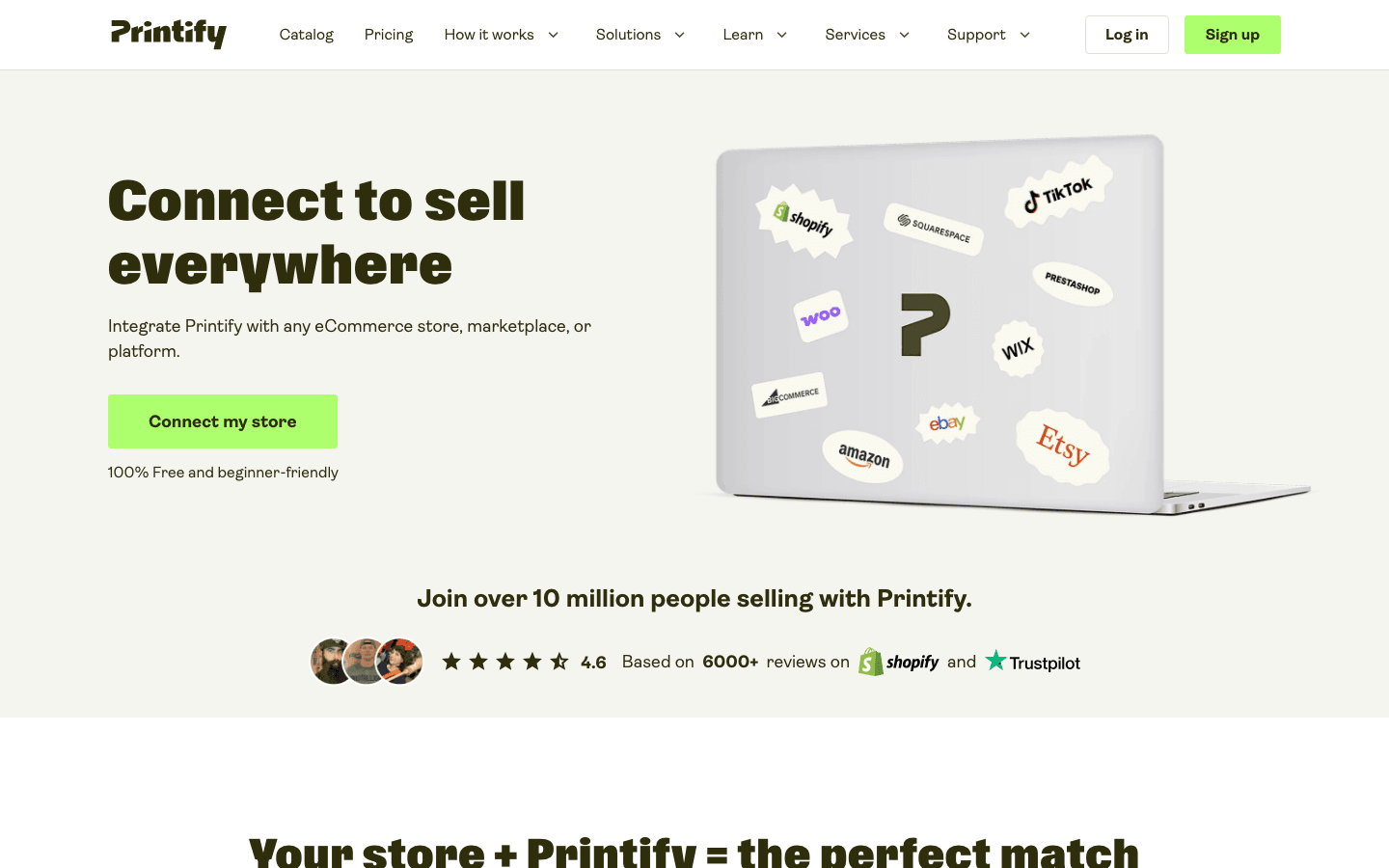
| Integrations | Shopify, WooCommerce, Etsy, eBay US, Wix, Big Cartel, PrestaShop, BigCommerce, Squarespace, TikTok Shop US, Amazon US, Printify API |
| Setup effort | Low to start; moderate once you compare providers, samples, shipping settings, and store policies |
| Website | https://printify.com/ |
Pricing and integration details were checked from official Printify pages on May 27, 2026.
What Printify Does
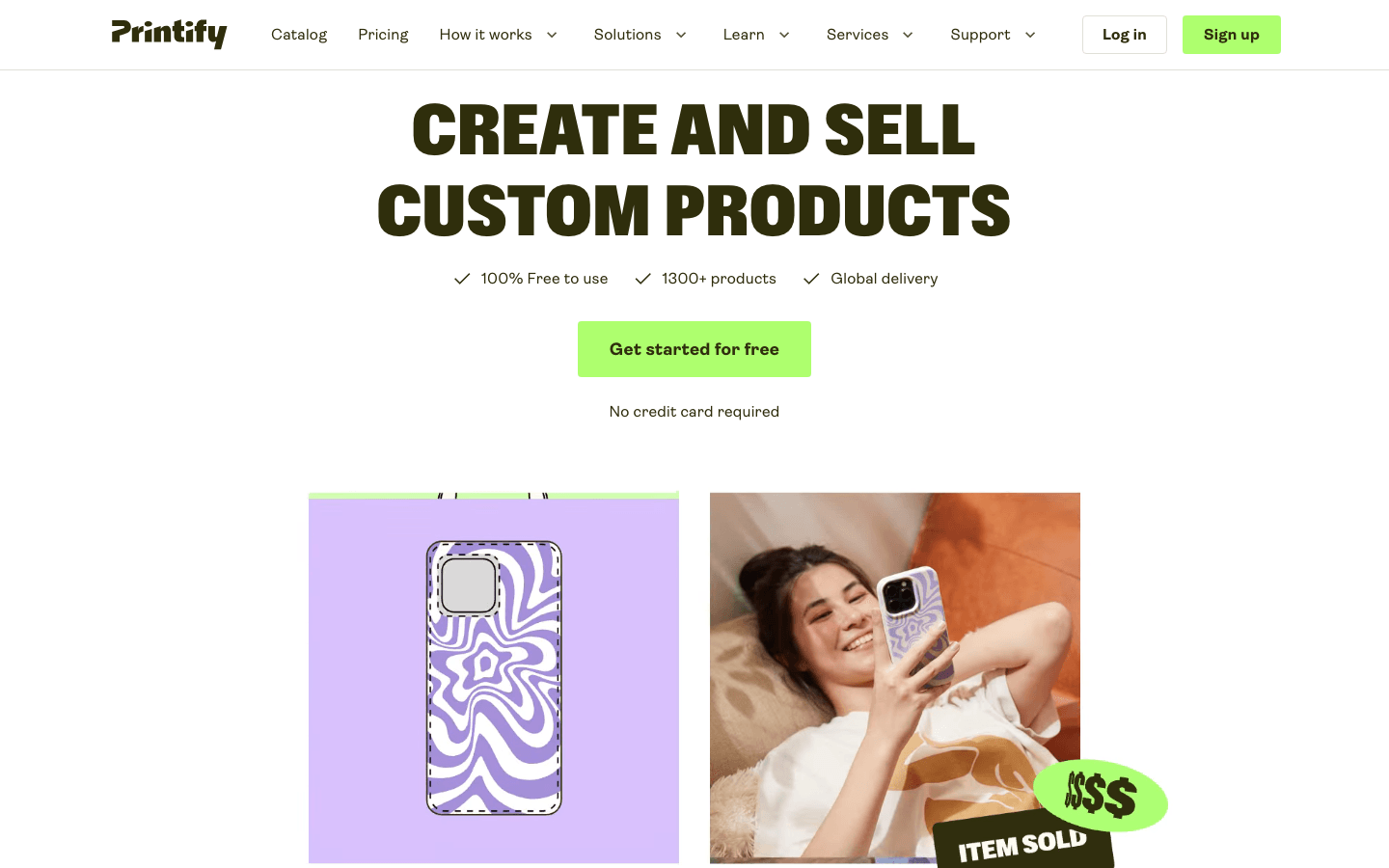
Printify lets merchants choose products, add designs, publish listings to connected sales channels, and send orders to print providers for production and delivery. Its own how-it-works page describes the flow as selecting a product, creating a design, publishing to channels such as Etsy, Amazon, and Shopify, then letting Print Providers handle fulfillment after a sale.
That makes Printify a good fit for early product testing, creator merch, marketplace experiments, and stores that want to launch a range of custom items without buying stock first. It is also why the boring work matters: product samples, provider selection, shipping profiles, return policies, and margin math decide whether the model feels elegant or like a spreadsheet with a hat on.
Best Use Cases
- Shopify, Etsy, WooCommerce, Amazon, eBay, TikTok Shop, and marketplace sellers launching print-on-demand products
- Creators testing custom apparel, mugs, posters, phone cases, home goods, and merch without holding inventory
- Stores that want a broad print provider network instead of one owned production facility
- Merchants that can compare samples, providers, shipping regions, and margins before scaling a product line
Who Should Compare Alternatives
- Brands that need full control over manufacturing, packaging, and every fulfillment facility
- Teams that want guaranteed single-provider quality rather than a marketplace-style print network
- Stores with no appetite for sample testing, shipping-rate checks, or provider-level QA
- Enterprise operators that need custom routing, SLAs, and account support without talking to sales
Feature Breakdown
Printify’s core value is breadth. Official pages position the platform around more than 1,300 products, a global print provider network, marketplace and ecommerce integrations, a Product Creator, mockup tools, and fulfillment workflows. Its help center also clarifies that Printify does not print products itself; it connects stores to print providers through the platform.
That marketplace model creates useful optionality. You can evaluate product cost, print provider location, fulfillment options, and sales-channel fit before committing. But optionality is not a substitute for QA. Merchants should compare product samples, shipping estimates, provider scores, and policies before treating one winning mockup as a finished business.
Where It Is Strong
- Fast product creation and mockup workflows for common POD categories
- Broad channel coverage for sellers already using Shopify, Etsy, WooCommerce, Amazon US, TikTok Shop US, or eBay US
- Provider choice for merchants comparing cost, location, and production options
- Optional tools such as Printify Choice, Express Delivery, Pop-Up Store, and Printify Connect
Where It Needs Discipline
- Sample quality can vary by item and print provider, so test before scaling
- Shipping rates and delivery promises must be checked at product/provider level
- Premium discounts need order volume to justify the subscription
- Custom branding requirements need careful review because options vary by product and provider
Pricing and Plan Caveats
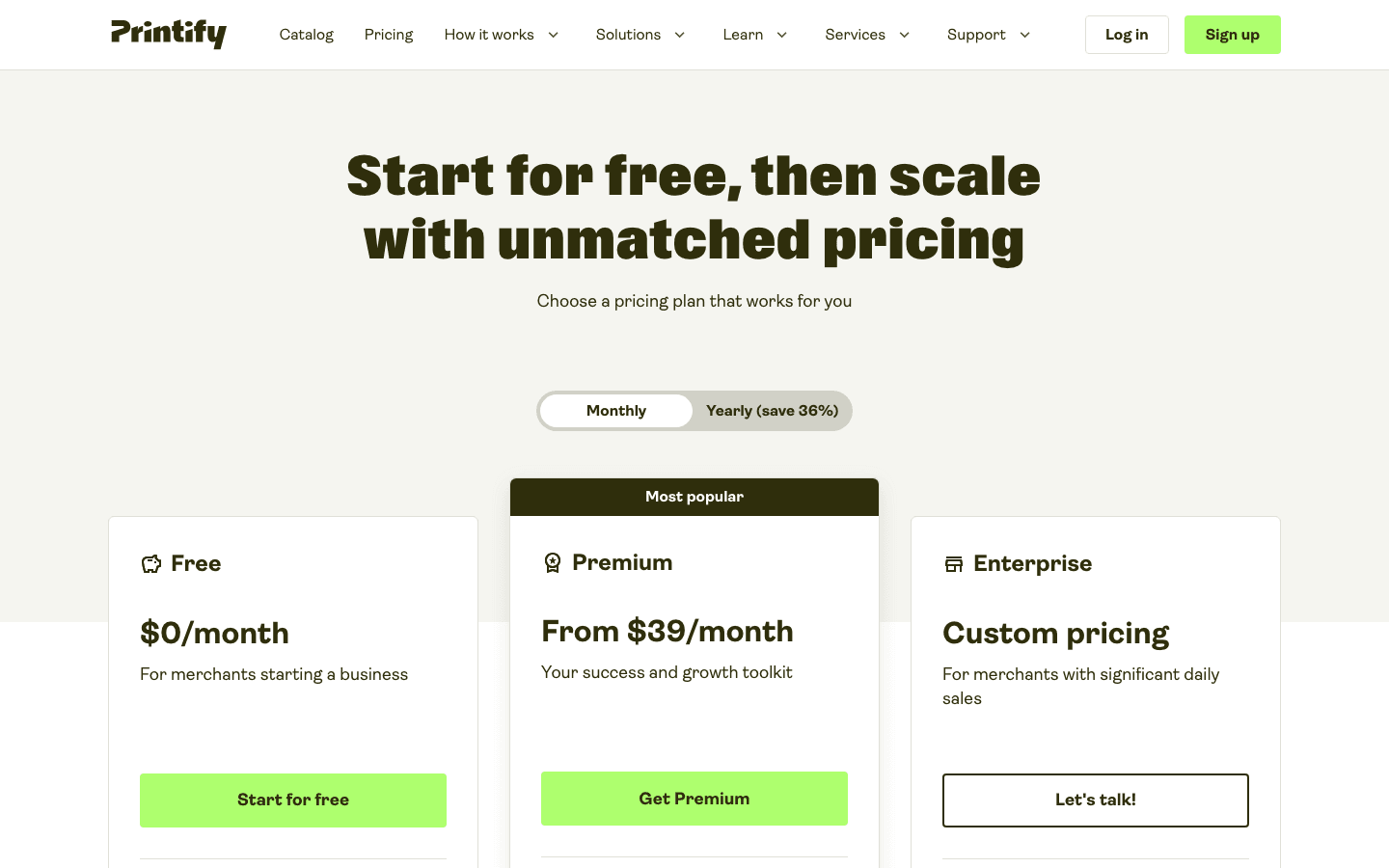
Printify has a Free plan at $0/month, Premium from $39/month on monthly billing, Premium from $24.99/month when billed yearly, and Enterprise with custom pricing. The Free plan lists five stores per account and unlimited product designs. Premium lists up to 10 stores, unlimited designs, Printify Connect order management, and product/custom-branding discounts. Enterprise is positioned for merchants with significant daily sales.
The key caveat: subscription pricing is only one part of the economics. Product costs, shipping, taxes, marketplace fees, storefront fees, discounting, returns, and paid traffic all affect margin. Check the live product and pricing pages before using any POD calculator in anger.
Pricing Snapshot
Current official plan positioning checked May 27, 2026.
| Plan | Price | Best fit | Important caveat |
|---|---|---|---|
| Free | $0/month | New merchants testing products and channels | Product and shipping costs still apply when orders are placed |
| Premium | From $39/month monthly; from $24.99/month billed yearly | Stores with enough order volume to benefit from product and branding discounts | Savings depend on product mix, volume, and current discount rules |
| Enterprise | Custom pricing | High-volume merchants needing deeper support or custom integration needs | Requires sales conversation and current terms |
Setup, Integrations, and Operations
Printify’s official sales-channel list includes Shopify, WooCommerce, Etsy, eBay US, Wix, Big Cartel, PrestaShop, BigCommerce, Squarespace, TikTok Shop US, Amazon US, and the Printify API. For a Shopify-heavy workflow, pair the Printify decision with the broader Shopify and Shopify growth stack choices you are already making around storefront, support, analytics, email, and conversion tracking.
Operationally, the first week should be boring on purpose: connect one channel, create a small product set, order samples, confirm shipping rates, test publishing, confirm tracking emails, and document how returns or misprints are handled. Printify can make launch fast; your process decides whether fulfillment stays sane.
Pros and Cons
Pros
- Free plan lets merchants create products, connect stores, and pay when orders are placed
- Large official catalog and broad print provider network support many product experiments
- Integrations cover major ecommerce stores and marketplaces, including Shopify, Etsy, WooCommerce, Amazon US, TikTok Shop US, and eBay US
- Premium can reduce product and branding costs for merchants with enough order volume
- Order routing, Printify Choice, Express Delivery, Pop-Up Store, and Printify Connect give sellers multiple operating modes
Cons
- Printify is the platform layer, not the company printing every item, so provider choice still matters
- Shipping cost, production speed, print quality, and available branding vary by product and print provider
- Premium savings only matter if order volume and product mix justify the subscription
- Serious brands should order samples and check product-specific policies before scaling paid traffic
Alternatives to Consider
Printful is the obvious comparison when you want a more controlled production and branding model. Gelato is worth checking for local production and global fulfillment needs. Gooten and CustomCat can fit merchants with more backend automation or US-focused production requirements. If the question is broader product sourcing rather than print-on-demand specifically, compare Spocket as a dropshipping supplier marketplace.
The right alternative depends on the constraint. If you need better margins, compare product costs and shipping. If you need brand control, compare packaging and production ownership. If you need reliability, order samples from the exact products and regions you plan to sell. The spreadsheet is not glamorous, but neither are refund threads.
Final Verdict
Printify is a practical first stop for print-on-demand sellers who want broad product choice, a free starting plan, and familiar ecommerce integrations. It is not a “set and forget” fulfillment magic trick. Treat it like a supplier marketplace with good tooling: test products, compare providers, watch margins, and upgrade to Premium only when the math supports it.
FAQs
What is Printify best for?
Printify is best for ecommerce sellers and creators who want to launch print-on-demand products through a large provider network without buying inventory upfront.
Is Printify free?
Printify has a Free plan. Official help content says merchants can create an account, connect a store, and design products without upfront fees, then pay product and shipping costs when an order is placed.
Does Printify print products itself?
Printify says it does not do the printing itself. It connects stores to a network of Print Providers, so provider selection, product choice, and sample testing still matter.
Which platforms does Printify integrate with?
Printify lists integrations including Shopify, WooCommerce, Etsy, eBay US, Wix, Big Cartel, PrestaShop, BigCommerce, Squarespace, TikTok Shop US, Amazon US, and the Printify API.
When should a seller compare Printify alternatives?
Compare alternatives when you need tighter brand control, owned production, faster region-specific fulfillment, stronger packaging options, or a provider model that reduces quality variation. See related sourcing, fulfillment, and logistics tools for ecommerce operators: Compare Shipping & Fulfillment Tools. Compare Printify with a related dropshipping supplier marketplace when product sourcing is the larger question: Read the Spocket Review. How ToolBlueprints evaluates software pages, sources, screenshots, pricing caveats, and buyer fit: ToolBlueprints Methodology.